A GUEST ARTICLE, BY ASA CONFREY
On March 1st 2009, I was eight years old, at Wembley with my Dad, sitting right behind the goal and holding a horn that had probably been annoying him all afternoon.
Manchester United had just spent 120 goalless minutes trying to break down Tottenham in the League Cup final. I cannot pretend to remember much about the football. What I do remember is the shootout, the noise when Anderson stepped up to take United’s fourth penalty, and the moment he put it past Heurelho Gomes to win the Carling Cup. The original Anderson, of course – City can keep their £116 million imitation.
A few minutes later, as the players celebrated on the pitch, Anderson was right in front of where my Dad and I were sitting. He noticed the horn I was carrying, mouthed ‘blow your horn’ and raised his hand towards his mouth to show me what to do. So I blew it. He laughed. It is one of those tiny moments that probably meant nothing to the player but has stayed with the fan ever since. Anderson is one of my earliest memories of supporting United, and certainly one of the happiest.
That probably explains why I have always had a soft spot for him. But it also makes it slightly strange to look back at the career of a player whose reputation now seems almost impossible to separate from what might have been.
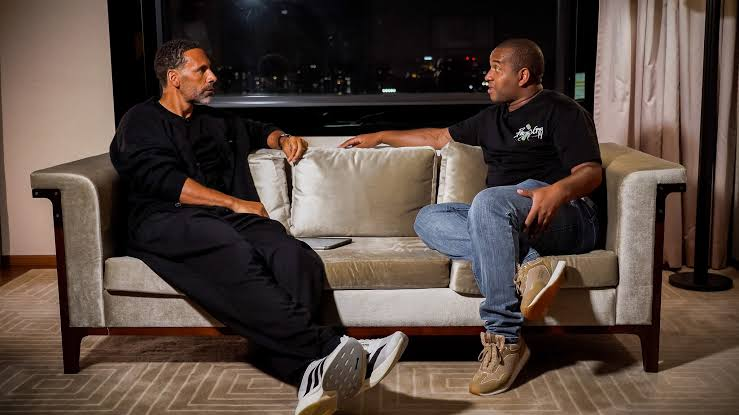
Anyone who came across Anderson’s sit-down interview with Rio Ferdinand earlier this year might have needed a second look. The man on the screen is now 38, a long way from the young Brazilian bouncing around Wembley in a United shirt. Yet listening to him laugh about his old team-mates, and reflect on how things might have turned out differently, brought back a familiar question; just how good was Anderson, and why did we never see more of it?
At 25, most of my own clear memories of watching him come from the latter part of his United career. His supposed heyday is something I have had to piece together from old matches, reports and interviews. The more I have looked into it, the more I think the usual dismissal of ‘he was simply a flop’ misses rather a lot.
The Golden Boy and the Expectation
When United agreed a deal worth around £26 million to sign Anderson from Porto in 2007, it was a significant investment in a player still only 19 years old. He was not being brought in as an obscure prospect who might turn into a useful squad player. He was one of the most talked-about young footballers in Europe.
He had emerged at Grêmio in Brazil before moving to Portugal, already earning a reputation as a powerful, skilful attacking midfielder. The Guardian’s coverage of his move described interest from some of Europe’s biggest clubs. In the same summer, Ferguson also added Nani and Owen Hargreaves. United had just reclaimed the Premier League title and were strengthening from a position of power.
There was an obvious question about where Anderson would play. In Portugal, much of his reputation had been built on flair and attacking freedom. At United, he was asked to operate deeper, using his acceleration and strength in the middle of the pitch, often alongside considerably more experienced players. Ferguson saw him as a possible long-term successor to Paul Scholes. That is quite a thing to ask of a teenager.
The beginning was not seamless. Early reports in 2007 questioned whether he was ready for the intensity of English football after a disappointing League Cup performance against Coventry. But within months, the conversation had changed. Anderson was starting major matches for the champions, and in December 2008 he won the Golden Boy award, ahead of players including Theo Walcott and Sergio Agüero.
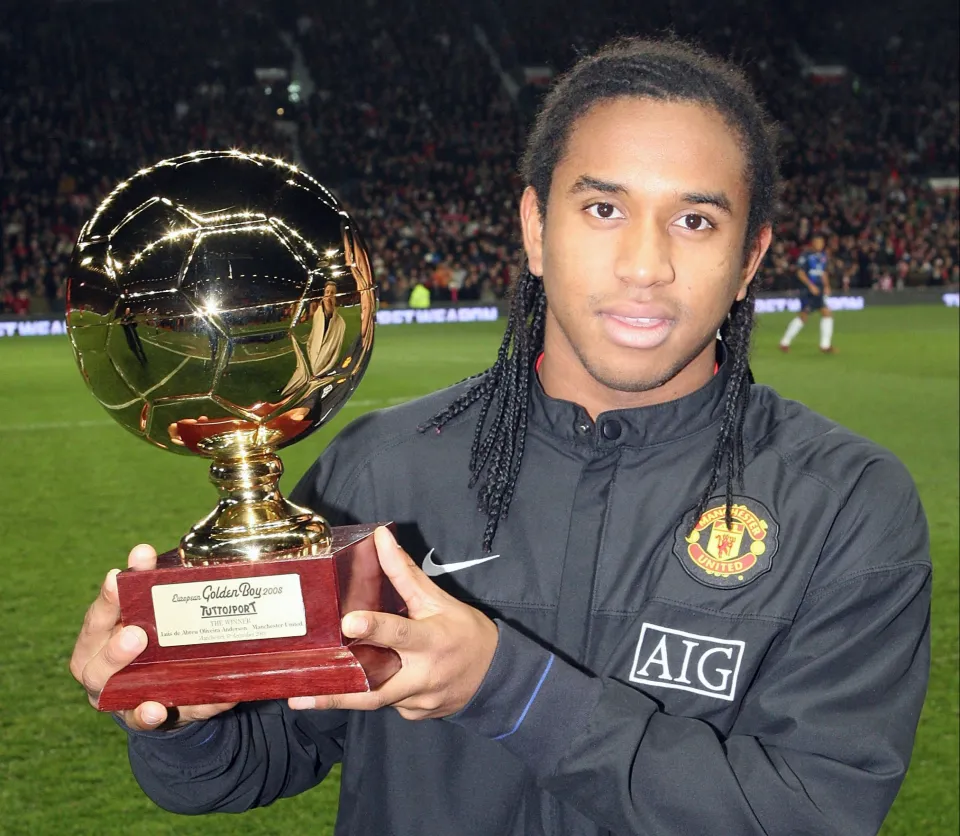
Looking back, it is easy to treat that award as another punchline. But imagine watching him in 2008 without knowing how his story would end: a Brazilian teenager, trusted in matches that could define United’s season, suddenly being recognised as one of the brightest young players in Europe. You can see why Reds believed they might be watching the start of something special. And there was evidence on the pitch to back it up.
The Performances I Wish I Remembered
Take the trip to Anfield in December 2007. United won 1-0 through Carlos Tevez, but one of the more striking details is that a still-teenage Anderson started in midfield against a formidable Liverpool side containing Steven Gerrard and Javier Mascherano. He did not look out of place. For a young player still finding his feet in a new country and a new position, that mattered.
Then there was the 4-0 FA Cup victory over Arsenal in February 2008. I have gone back to that match because the accounts from the time are so different from the way Anderson is often discussed now. Even Arsenal’s own match report singled out his eye-catching performance. He was quick into challenges, brave in possession and able to drive United forward. This was not just a talented youngster being carried by a great side.
Perhaps even more revealing is what happened in the Champions League semi-final against Arsenal in 2009. Ferguson started Anderson in both legs. He was preferred to Scholes for the first, a 1-0 win at Old Trafford, and helped United overwhelm Arsenal again in the return leg at the Emirates. After the first match, Ferguson publicly spoke about Anderson eventually replacing Scholes, praising his speed and strength. For all the questions that would later surround Anderson’s career, Ferguson’s faith in him at this level is a reminder of just how much potential he once possessed.
Anderson also had a habit of appearing in the moments that matter. In Moscow in 2008, with the Champions League final against Chelsea going to penalties, he converted his spot-kick in sudden death. Less than a year later came Wembley, Tottenham and the penalty I remember so vividly. Remarkably, he took both kicks before he had scored a competitive goal for United. His first finally arrived against Spurs in a 3-1 league win in September 2009.
There were flashes later on as well. In United’s legendary 8-2 win over Arsenal in 2011, it was Anderson’s clever lofted ball that helped create Danny Welbeck’s opening goal. Such moments were a reminder of the imagination beneath the energetic, combative midfielder he had become.
None of this means Anderson was secretly better than Scholes, or that the Golden Boy award guaranteed he would become one of the best midfielders in the world. It does suggest that, for a time, his promise was real rather than imagined. That is the part of his story I had never properly appreciated.
When the Promise Stopped Becoming Progress
If the first few years explain why so many United supporters believed in Anderson, the years that followed explain the frustration.
In February 2010, Anderson suffered what would prove to be one of the most significant setbacks of his career. Making his first appearance in over a month against West Ham at Old Trafford, he lasted less than 10 minutes before rupturing his ACL in his left knee, ending his season and any hopes of representing Brazil at that summer’s World Cup. More setbacks followed. There were runs of games when he seemed to be finding rhythm again, then another injury or another spell out of the side. For a player whose game relied heavily on sharp movement and bursts of acceleration, that mattered. The gap between what he could do on a good afternoon and what he could produce consistently only widened.
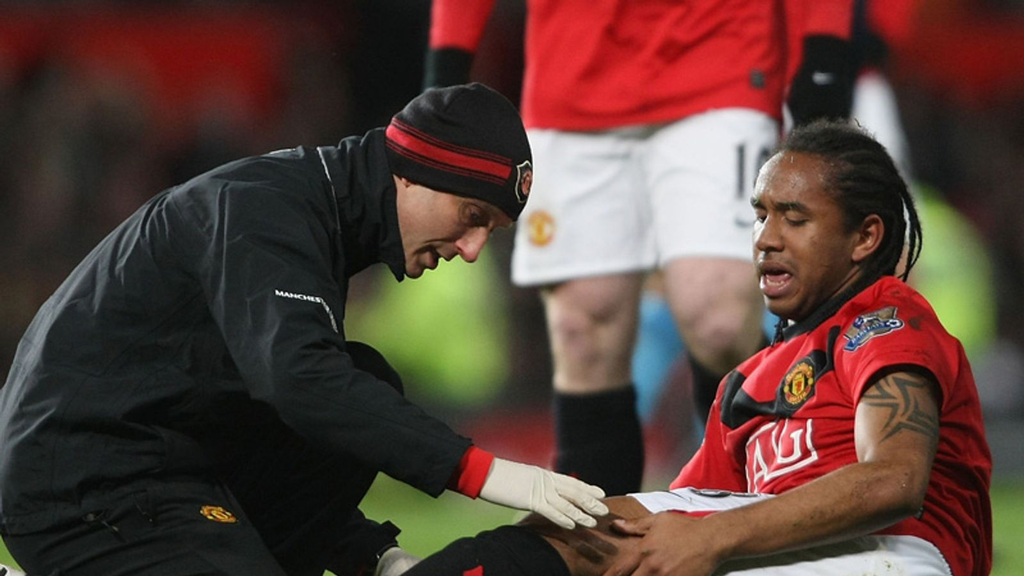
Fitness and weight were also recurring subjects of criticism. Some of that scrutiny was understandable for a player at a club with United’s standards. There are echoes here of the criticism Luke Shaw has faced in more recent years, where genuine concerns about fitness and availability have sometimes turned into broader questions about a player’s attitude and commitment. But it would be too simplistic to present Anderson’s decline as merely the story of a gifted footballer who could not be bothered.
Anderson himself said on leaving United in 2015 that he had come back too quickly from a knee injury and then suffered further problems. His version does not remove questions about his own responsibility, but it deserves to be part of the discussion.
In his 2018 interview with Andy Mitten for ESPN, Anderson looked back on United with affection, particularly Ferguson and the experience of being part of that dressing room. And in his more recent conversation with Ferdinand, he offered a revealing comparison with ex-roommate Cristiano Ronaldo, suggesting that even a small part of Ronaldo’s relentless mentality might have changed his own career. It is hard to hear that without wondering whether Anderson himself feels the same sense of unfinished business.
Eventually, the occasional excellent performance was not enough. After making just 49 Premier League appearances in the almost four years following his career-defining knee injury, Anderson joined Fiorentina on loan in January 2014. By February 2015, he was leaving United permanently for Internacional in Brazil – not to be confused with Internazionale of Milan – on a free transfer. He was only 26. That, more than any unflattering photograph or joke about his fitness, is perhaps the most damning detail of all. A player once expected to inherit a starting place at the heart of United’s midfield was gone while he should still have been approaching his prime.
A Flop, a Winner, or Something in Between?
There is no point pretending Anderson fulfilled his potential. He did not become the midfield leader Ferguson had envisaged, and it is fair to say that United did not get the sustained influence they might have expected from such an expensive young signing.
But the word ‘flop’ still feels unfair. Four Premier League titles, a Champions League, two League Cups and a Club World Cup are not the honours of somebody who contributed nothing. Of course, medals alone do not settle a player’s legacy, particularly when he spent parts of his United career on the fringes, but neither should they be dismissed. He made a genuine contribution to a United side that regularly competed with, and often beat, the very best teams in Europe.
I also think younger supporters like me can easily inherit a version of a player without ever having watched the period that made his reputation. If your clearest picture of Anderson is an injury update, a fitness joke or a late substitute appearance, then the stories about him holding his own against Gerrard or Fabregas can sound exaggerated. Going back through those matches has made me realise they were certainly not.
His career is just another reminder that talent is only one part of what makes a great player. Staying fit, adapting to a changing role and sustaining the same standards season after season matter just as much. Anderson had enough ability to make the top possible. He just never stayed there for long enough.
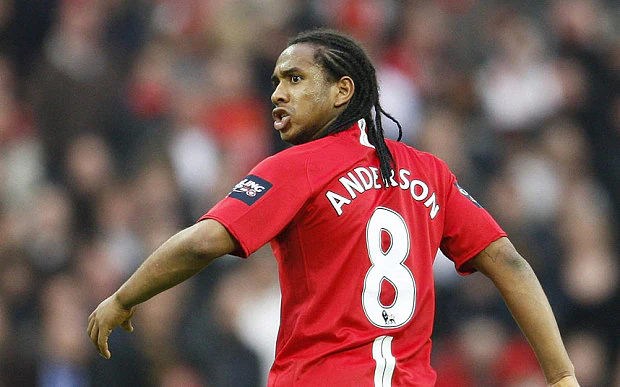
And yet I cannot bring myself to file him under United’s failed transfers. Maybe that is sentimentality. Maybe it is because, before I was old enough to understand what a midfielder was supposed to do, he gave me a moment at Wembley I have never forgotten.
For me, Anderson will always be a cult hero: the smiling Brazilian who scored the winning penalty, noticed an eight-year-old with a horn at Wembley and laughed when I blew it. He briefly looked capable of becoming almost anything. He is also one of the clearest examples of how a player can win so much and still leave everyone wondering what could have been.